
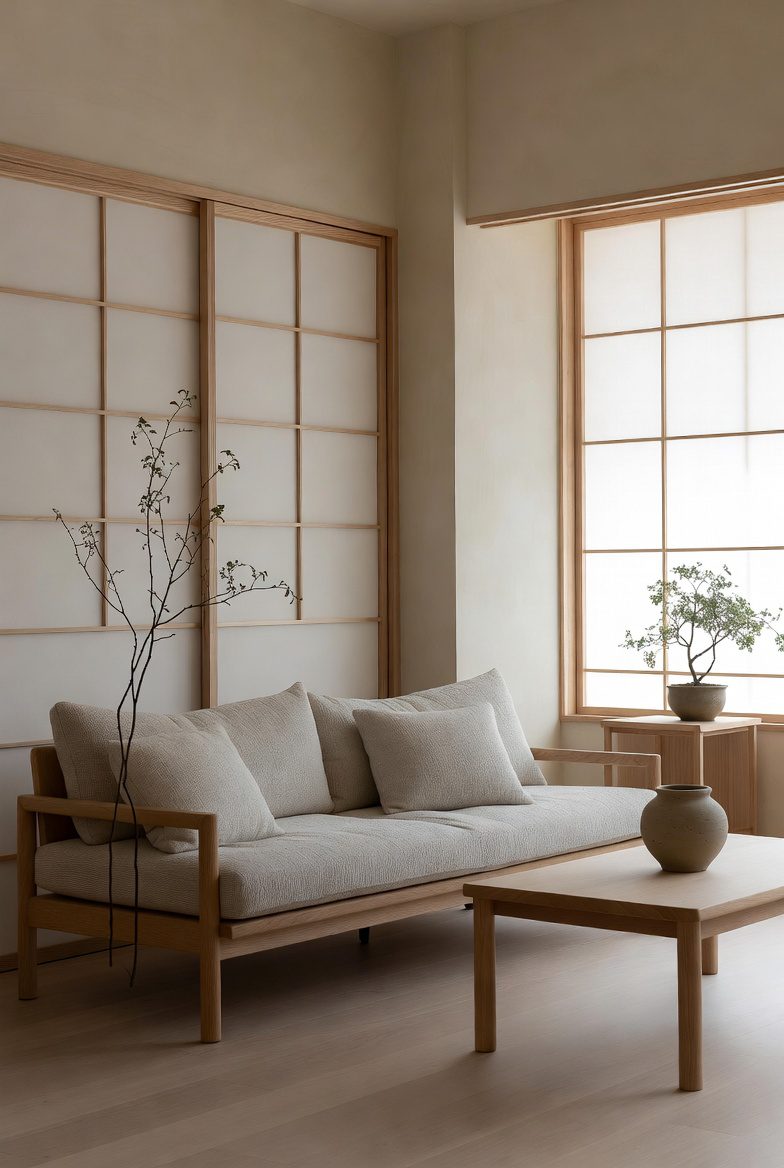
15 Japandi Living Room Ideas: Minimalist Meets Cozy in Modern Interiors
The search for a living room that is both serene and inviting often leads designers to a beautiful intersection of two distinct philosophies: Japanese minimalism and Scandinavian warmth. The result is Japandi, a design hybrid that celebrates simplicity, natural elements, and functional comfort. Creating a Japandi living room is about curating a space that feels uncluttered yet cozy, modern yet timeless.
This style blends the Japanese concept of “wabi-sabi,” which finds beauty in imperfection, with the Scandinavian practice of “hygge,” which embodies a sense of cozy contentment. The fusion results in interiors that are calm, balanced, and deeply connected to nature. If you’re looking to transform your space into a peaceful retreat, here are 15 Japandi living room ideas to inspire your journey.
1. Embrace a Neutral, Earthy Palette
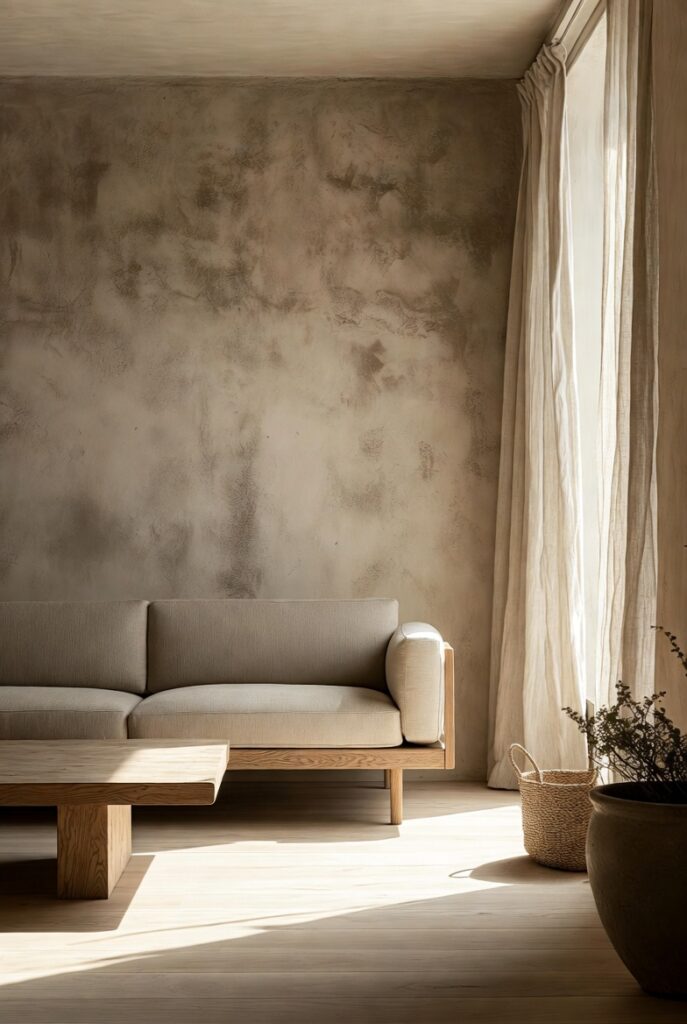
The foundation of any Japandi living room is its color scheme. Move away from stark whites and embrace a richer, warmer neutral palette. Think oatmeal, stone, beige, and muted grays. These colors create a calming backdrop that allows textures and materials to stand out. Accent with earthy tones like terracotta, soft greens, and deep charcoal to add depth without overwhelming the senses.
2. Prioritize Natural Materials
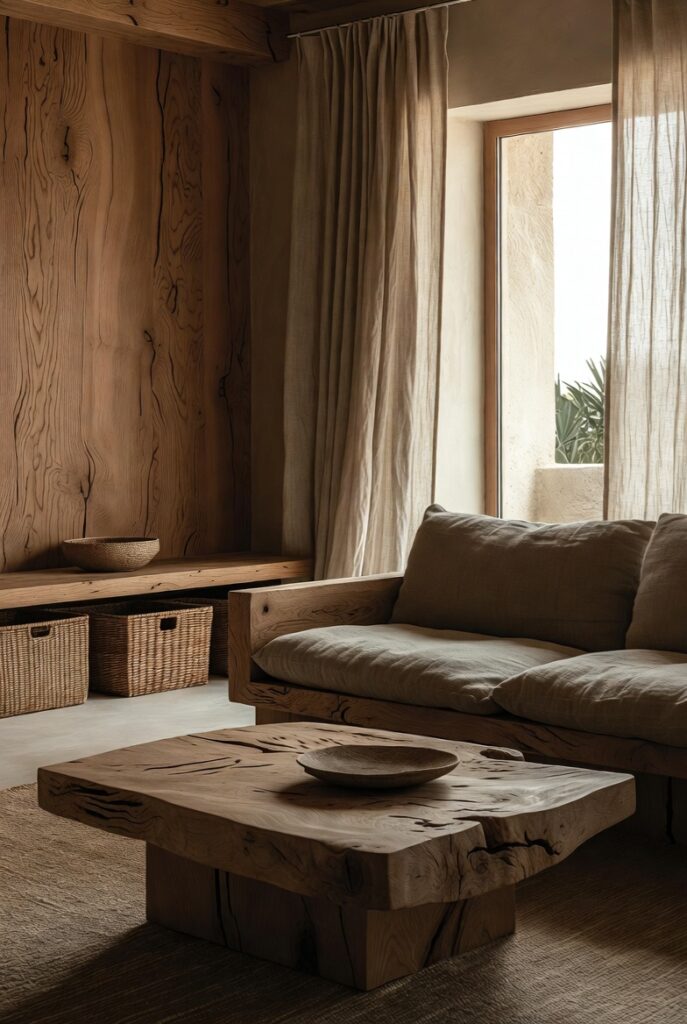
Both Japanese and Scandinavian designs have a deep reverence for nature. Bring the outdoors in by using natural materials generously. Light-toned woods like oak, maple, and ash are staples. Combine them with bamboo, rattan, jute, and linen. A wooden coffee table, a jute area rug, and linen curtains can instantly establish the organic feel of a Japandi living room.
3. Choose Low-Profile Furniture
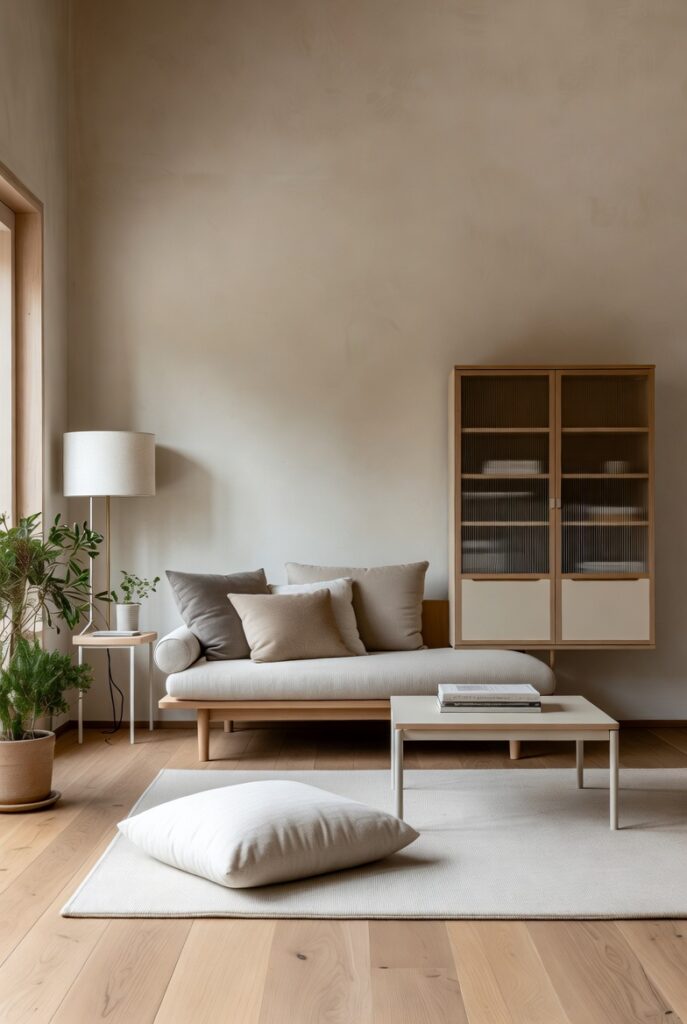
Furniture in a Japandi space is characterized by clean lines and low-slung silhouettes. This design choice fosters a sense of groundedness and connection to the earth, a key element in Japanese interiors. Opt for sofas, armchairs, and coffee tables that sit closer to the floor. This not only looks sleek but also makes the room feel more open and spacious.
4. Focus on Craftsmanship and Quality
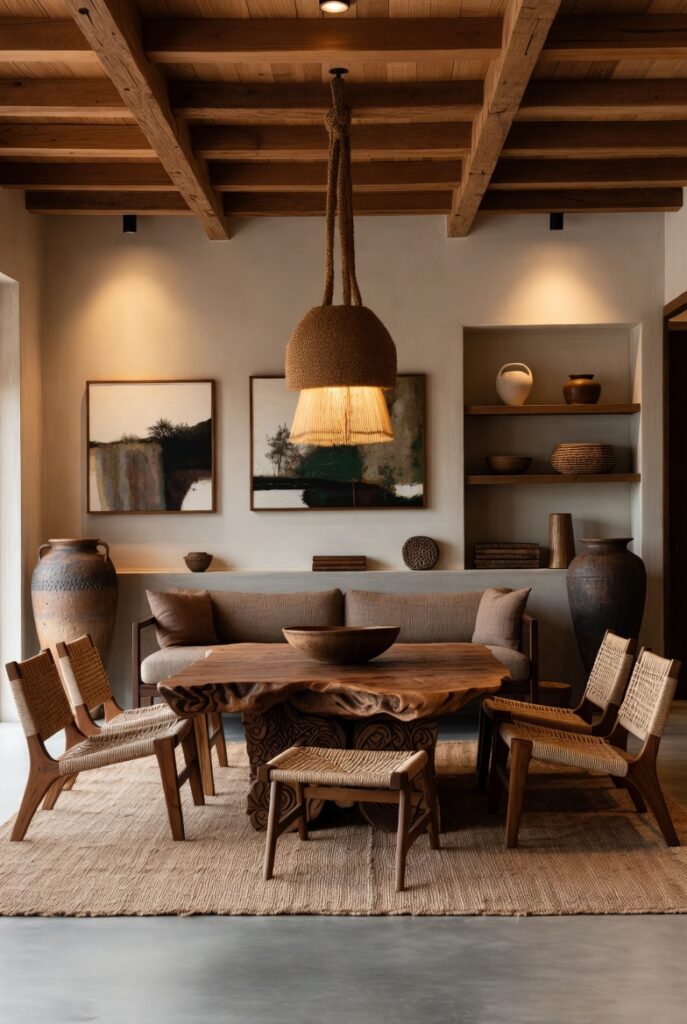
Japandi design values quality over quantity. Instead of filling your room with disposable items, invest in a few well-made pieces that are built to last. Look for furniture with visible joinery, handcrafted details, and solid construction. A single, beautifully crafted armchair or a solid wood media console makes a more significant impact than a room full of clutter.
5. Introduce Dark Accents for Contrast
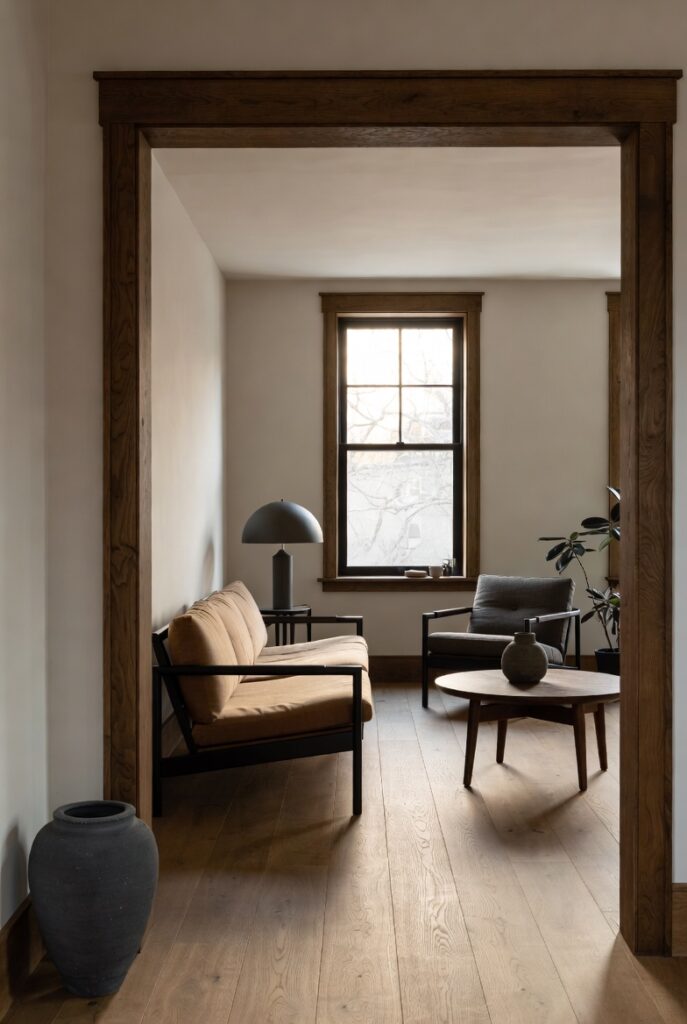
While the overall palette is light and neutral, a Japandi living room benefits from strategic contrast. Introduce dark accents to create visual interest and a touch of drama. This can be achieved through black metal chair legs, a dark-stained wooden side table, charcoal throw pillows, or black-framed artwork. These elements help ground the space and prevent it from feeling one-dimensional.
6. Declutter with Purpose
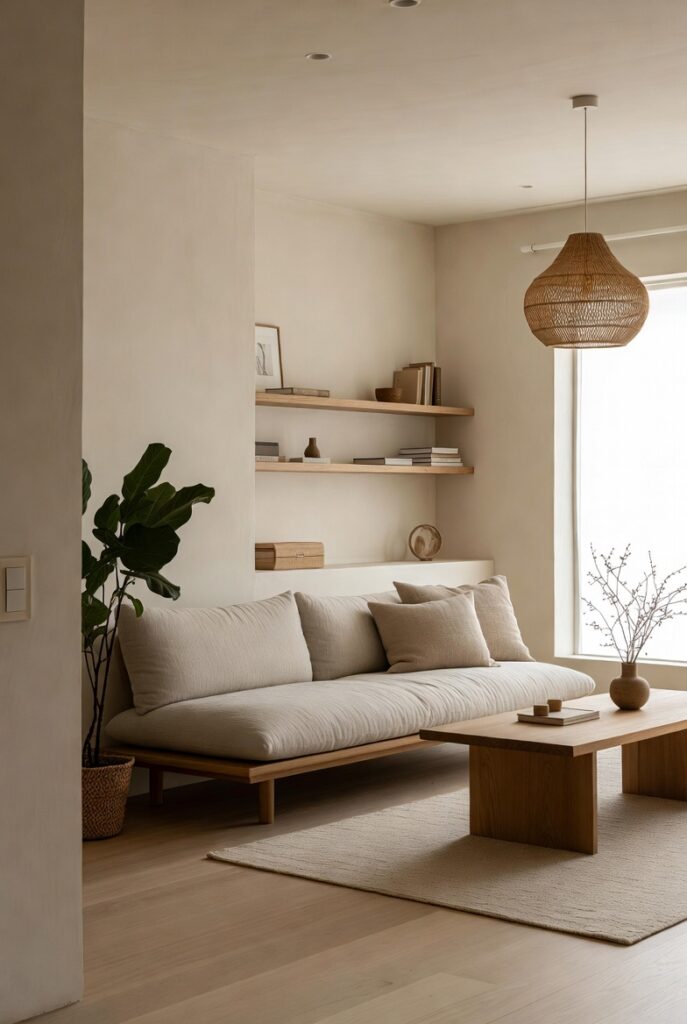
Minimalism is a core tenet of the Japandi style. This doesn’t mean your living room has to be empty, but it does mean everything should have a purpose and a place. Practice mindful curation of your belongings. Use clever storage solutions like sleek cabinets, woven baskets, and multi-functional furniture to keep clutter out of sight. A tidy space promotes a calm mind.
7. Let in the Light
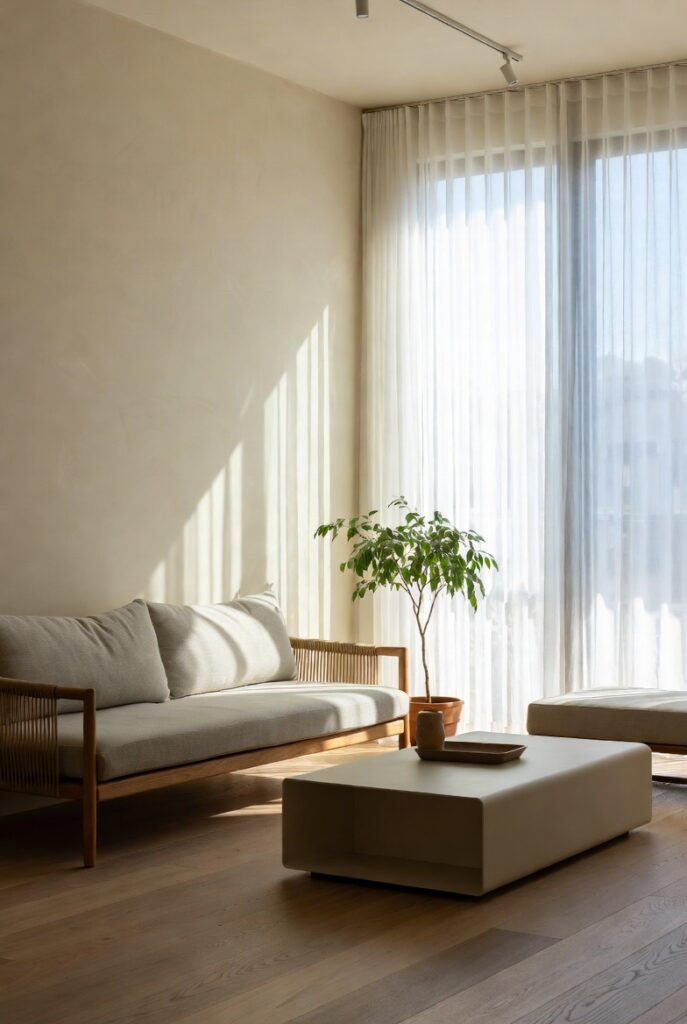
Natural light is a crucial component of a Japandi living room. Keep window treatments simple to maximize the amount of daylight that fills the space. Sheer linen or cotton curtains are an excellent choice, as they provide privacy while still allowing light to filter through. Avoid heavy, ornate drapes that block light and feel cumbersome.
8. Mix and Match Textures
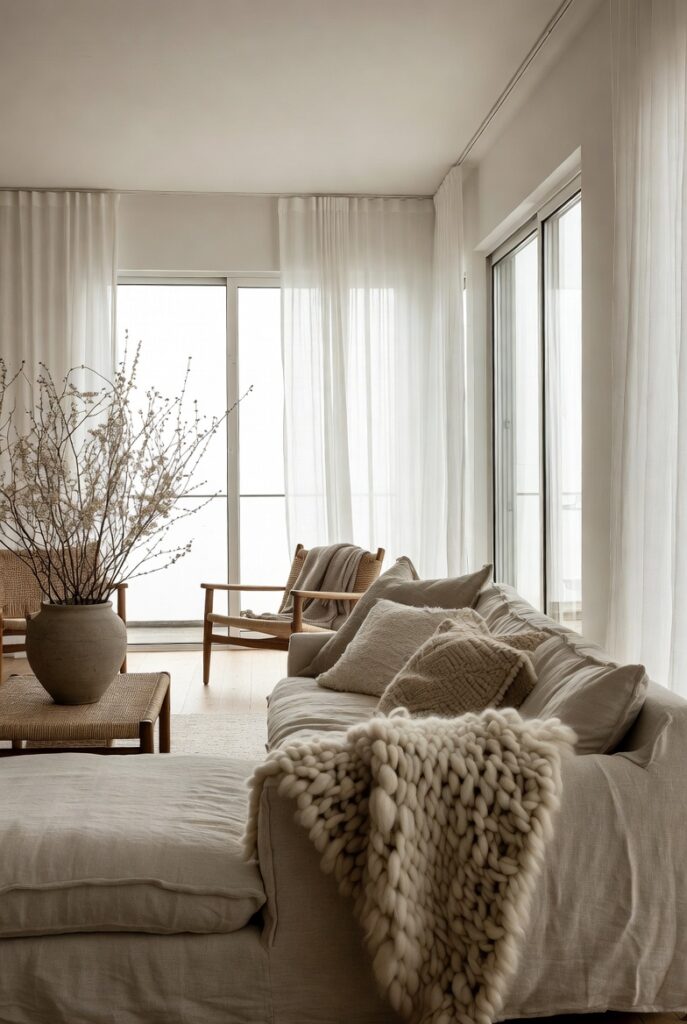
To keep a neutral room from feeling flat, layer a variety of textures. Combine the smoothness of wood with the roughness of a stone accent, the softness of a bouclé sofa with the coarseness of a wool rug, and the crispness of linen with the plushness of a cashmere throw. These tactile differences add warmth, depth, and a cozy “hygge” feeling to the minimalist aesthetic.
9. Find Beauty in Imperfection (Wabi-Sabi)
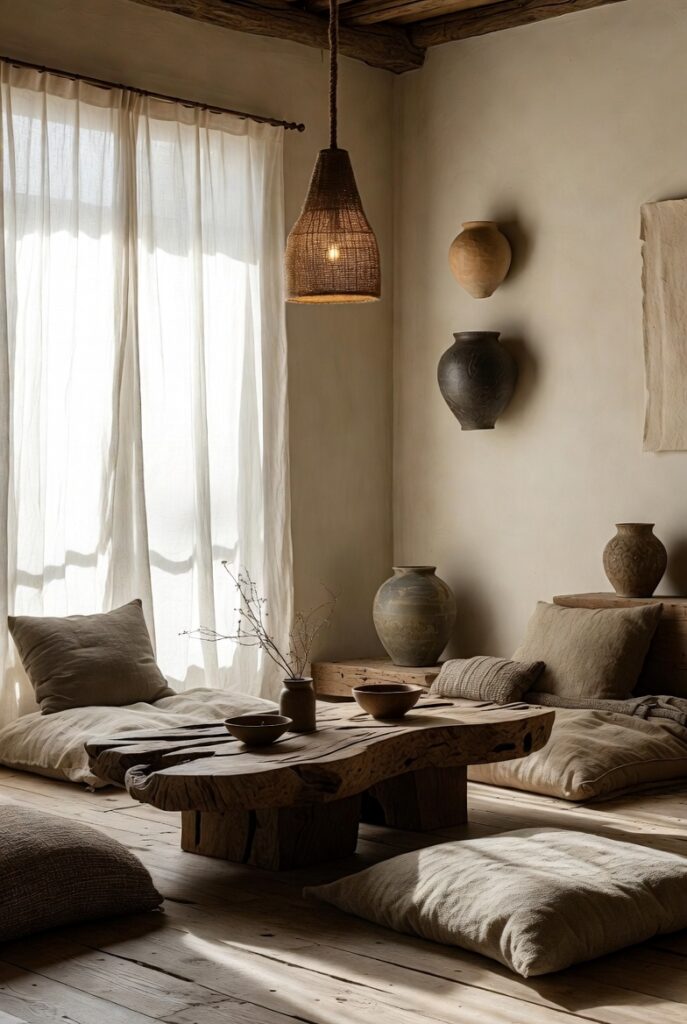
Embrace the wabi-sabi philosophy by incorporating items that show signs of age or are perfectly imperfect. This could be a handmade ceramic vase with a slightly uneven glaze, a reclaimed wood bench, or a piece of art that celebrates asymmetry. These elements add character, soul, and a sense of history to your Japandi living room, making it feel authentic and lived-in.
10. Incorporate Greenery
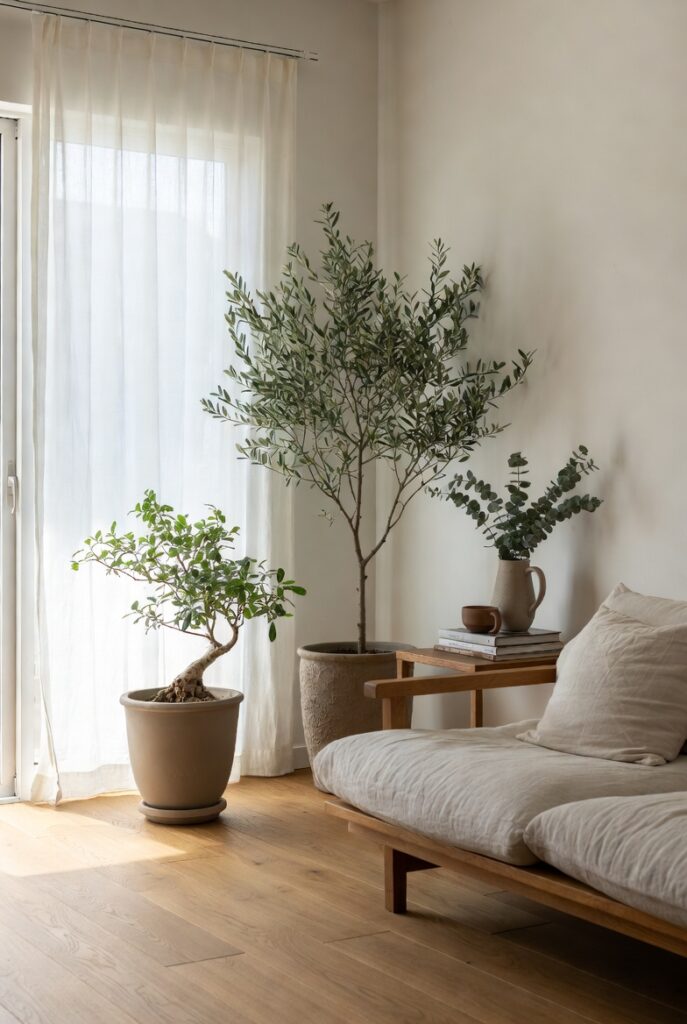
Plants are essential for bringing life and a touch of nature indoors. Choose plants with interesting forms and simple foliage, such as a fiddle leaf fig, a snake plant, or a delicate bonsai tree. Display them in minimalist, earthy planters made of ceramic, concrete, or terracotta. A single, well-placed plant can serve as a beautiful living sculpture.
11. Use Statement Lighting
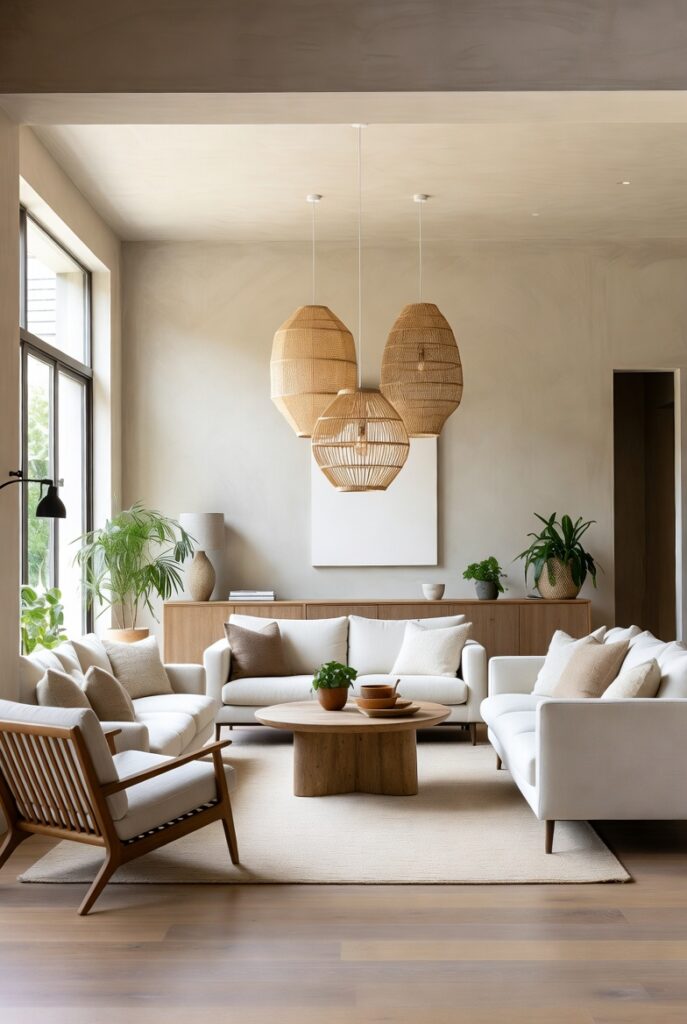
Lighting in a Japandi interior is both functional and artistic. Choose light fixtures that act as focal points. Large, sculptural paper lanterns are a classic choice that diffuses a soft, warm glow. Pendants made from natural materials like bamboo or rattan also work well. The goal is to create a lighting scheme that is layered, warm, and inviting.
12. Create Functional Zones
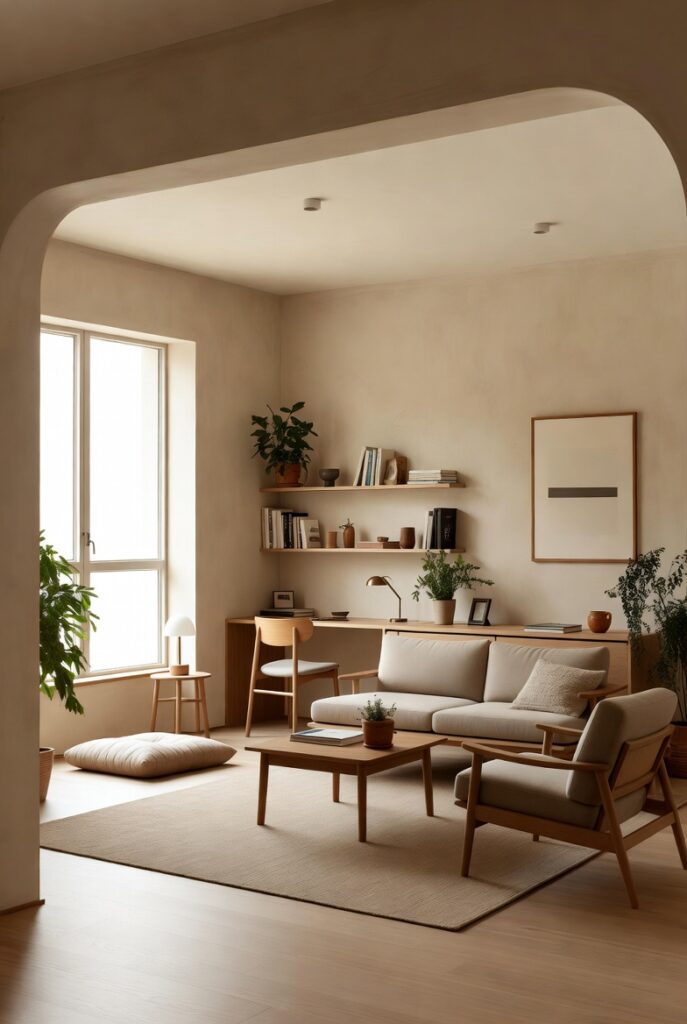
An open-plan living room can still feel organized and intentional by creating distinct functional zones. Use area rugs to define the main seating area. A simple console table behind the sofa can separate the living space from a dining area. Arrange furniture in a way that promotes conversation and flow, ensuring the room is as practical as it is beautiful.
13. Keep Decor Minimal and Meaningful
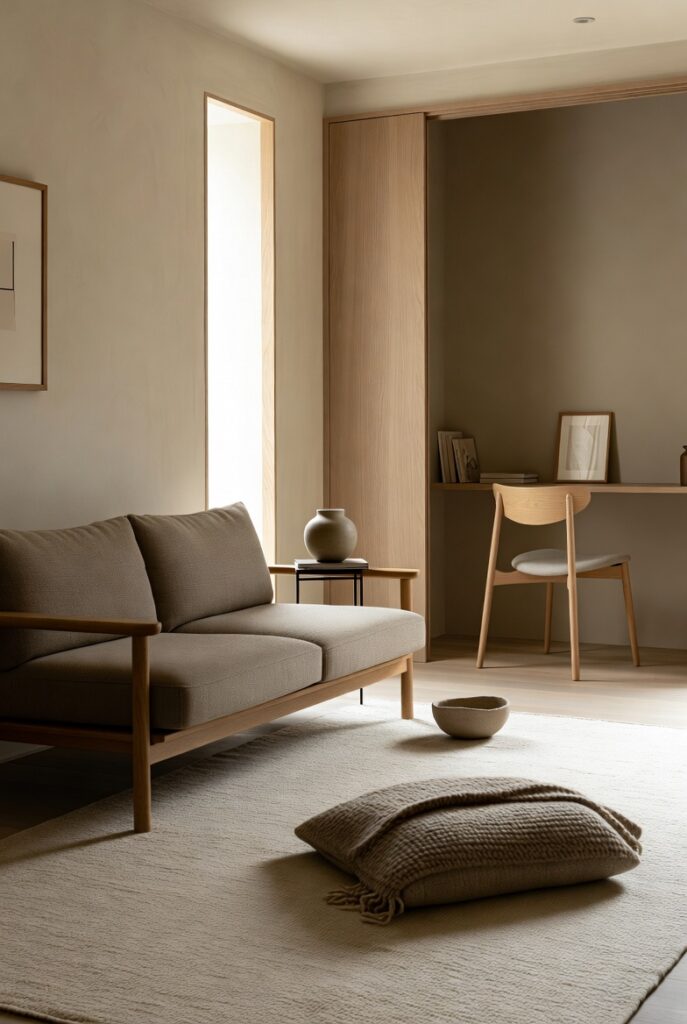
When it comes to decor, less is more. Each object should be chosen with intention and have personal meaning. Instead of a gallery wall, opt for a single, large-scale piece of abstract art. A few carefully selected books on a coffee table or a simple ceramic sculpture on a shelf are all you need. This approach ensures your Japandi living room remains a tranquil and uncluttered sanctuary.
14. Blend Curved and Straight Lines
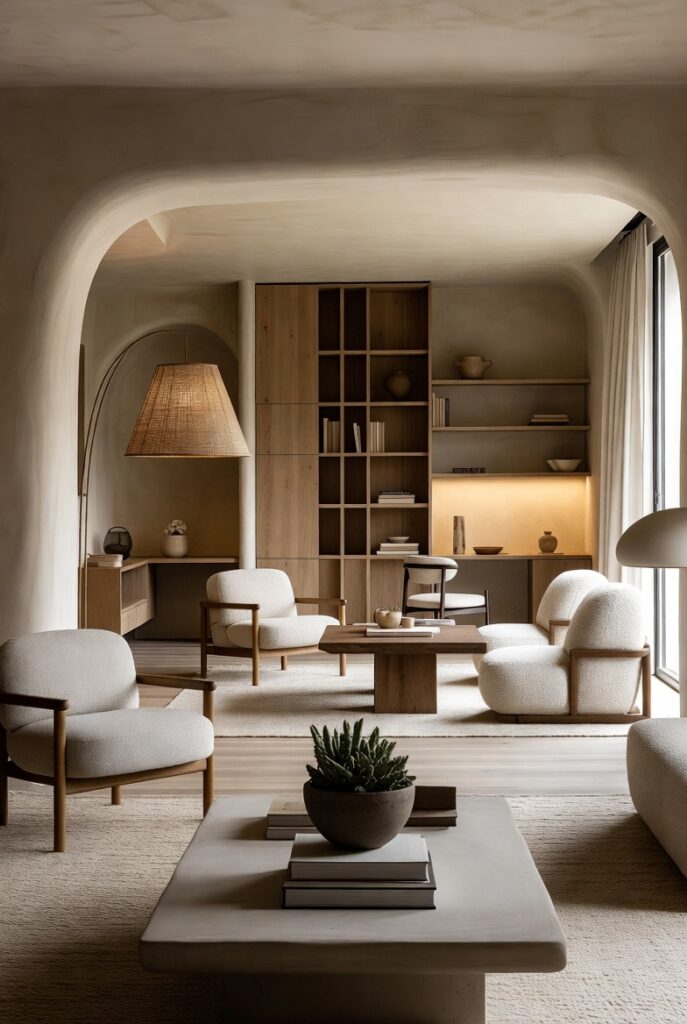
The harmony of Japandi design comes from balancing different elements. Juxtapose the clean, straight lines typical of Japanese design with the soft, organic curves of Scandinavian furniture. For example, pair a rectangular sofa with a round coffee table or a curved armchair. This interplay of shapes creates a dynamic yet balanced environment.
15. Prioritize Comfort
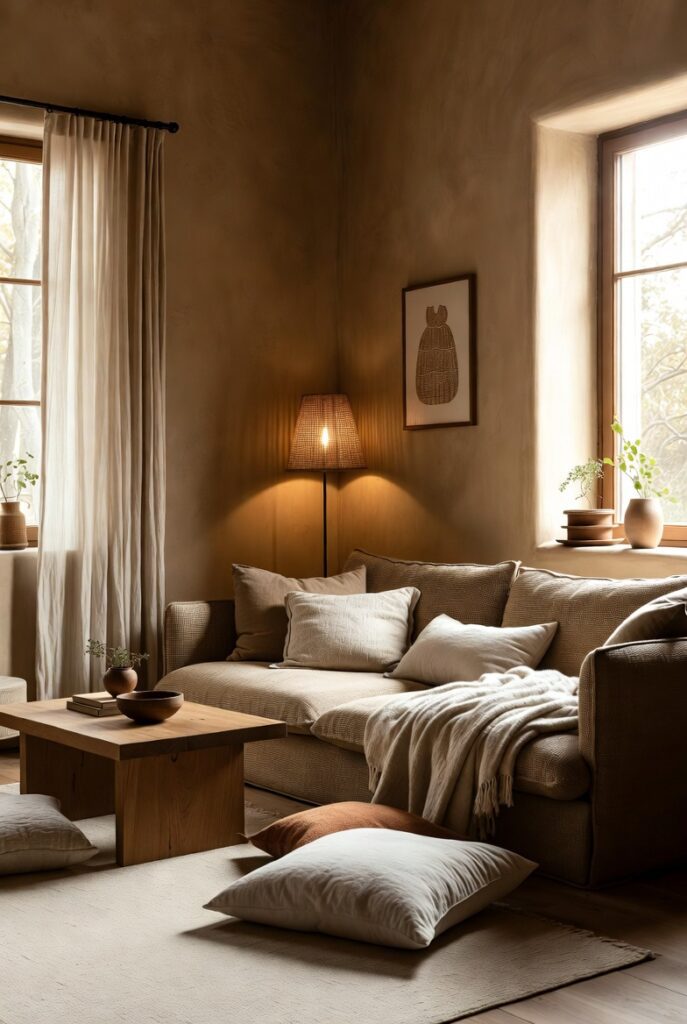
Despite its minimalist leanings, a Japandi living room should never sacrifice comfort. This is where the Scandinavian “hygge” influence truly shines. Ensure your sofa is deep and comfortable, and pile it with soft throw pillows and blankets. Choose armchairs that you can curl up in. The space should invite you to relax, unwind, and enjoy simple moments.
Frequently Asked Questions (FAQs)
Q: What is the main difference between Japandi and minimalist design?
A: While both styles value simplicity, Japandi is inherently warmer and cozier than traditional minimalism. Minimalism can sometimes feel stark or cold due to its strict focus on essentials. Japandi incorporates the Scandinavian concept of “hygge,” adding soft textures, warm neutral colors, and natural materials to create a more inviting and comfortable atmosphere.
Q: What colors should I use for a Japandi living room?
A: The core palette for a Japandi living room consists of warm, earthy neutrals. Think beige, cream, oatmeal, taupe, and stone gray. You can complement these with natural accent colors like muted greens, soft blues, terracotta, and charcoal for contrast and depth.
Q: Can I use my existing furniture in a Japandi design?
A: Absolutely. The key is to curate your pieces. Look for furniture with clean lines and natural materials. You might be able to incorporate an existing wooden coffee table or a simple sofa. The goal is to create a cohesive look by focusing on quality and decluttering any items that feel overly ornate or don’t fit the calm, functional aesthetic.
Q: How do I keep a Japandi living room from feeling boring?
A: The secret to a compelling Japandi space is texture and contrast. Layer different materials like wood, linen, wool, bouclé, and stone. Introduce subtle contrast with dark accents in black or charcoal. Finally, incorporate imperfect, handcrafted items (wabi-sabi) and sculptural plants to add personality and visual interest.
Final Words
Creating a Japandi living room is an exercise in mindful design. It’s about more than just following a trend; it’s about crafting a home that supports a calmer, more intentional way of life. By blending the disciplined simplicity of Japanese aesthetics with the rustic warmth of Scandinavian comfort, you can design a space that is both a stylish showpiece and a personal sanctuary.
Focus on quality materials, a serene color palette, and purposeful decor. Embrace the beauty of imperfection and prioritize comfort. In doing so, you will create a Japandi living room that not only looks beautiful but also feels deeply restorative—a perfect retreat from the complexities of the outside world.