
12 Elegant Glass Extensions That Blend Perfectly with Traditional Architecture
There is a unique magic that happens when old meets new. Homeowners often struggle with the limitations of traditional properties: small windows, disconnected layouts, and dark corners. While the charm of a period home is undeniable, modern living often demands more light and space. This is where a well-designed glass extension can completely transform a property without erasing its history.
Adding a modern structure to a heritage building might sound risky, but when done correctly, it enhances the original architecture rather than overshadowing it. A glass extension acts as a bridge, connecting the cozy, historic feel of the main house with the openness of the outdoors. It provides a visual break that respects the weight of brick and stone while introducing a sense of weightlessness and transparency.
In this guide, we will explore twelve distinct styles and approaches for integrating contemporary glass structures into traditional homes. Whether you own a Victorian terrace, a country cottage, or a Georgian townhouse, these ideas will inspire you to reimagine your living space.
1. The “Invisible” Linkway

One of the most sensitive ways to add space to a listed building or a heritage home is the glazed linkway. This type of glass extension serves as a connector between the main historic house and a new addition or an existing outbuilding, like a converted barn or garage.
Because it is constructed almost entirely of structural glass, the linkway appears “invisible” to the naked eye from a distance. It clearly delineates what is old and what is new, a principle highly favored by conservation officers. The transparency ensures that the original stonework or brick remains visible, maintaining the integrity of the original silhouette.
2. The Frameless Glass Box

For the ultimate statement in minimalism, the frameless glass box offers uninterrupted views of the garden. By using structural glazing with silicone bonding instead of heavy frames, this style eliminates visual clutter.
When attached to a rustic stone cottage or a red-brick Victorian home, the stark contrast is breathtaking. The heavy, textured masonry of the original building is juxtaposed against the sleek, smooth surface of the glass extension. This contrast highlights the character of the old building, making the historic elements pop while providing a sun-drenched space for a modern kitchen or dining area.
3. The Industrial Crittall-Style Sunroom

Not all glass extensions need to be invisible. Steel-framed glazing, often referred to as Crittall-style, brings a strong, graphic element to an extension. The slender black metal frames nod to the industrial heritage of the early 20th century, making them a perfect companion for Victorian and Edwardian properties.
This style works exceptionally well because the grid pattern echoes the vertical proportions of traditional sash windows without mimicking them directly. It creates a rhythm that feels familiar yet distinctly modern. A steel-framed glass extension adds character and definition, perfect for creating a dramatic transition zone between a period kitchen and a patio.
4. The Wraparound Glass Extension

Terraced houses and semi-detached homes often suffer from the “side return” issue—a narrow, dark strip of land alongside the kitchen that rarely gets used. A wraparound glass extension utilizes this dead space, extending both to the side and the rear of the property.
By using a glass roof for the side return and glazed doors for the rear, you flood the deepest part of the house with natural light. This design completely alters the flow of a traditional ground floor, turning a narrow galley kitchen into a wide, open-plan social hub. The glass roof allows you to look up and see the original rear facade of the upper stories, maintaining a visual connection to the building’s history.
5. The Gable-End Glass Wall

If your traditional home has a pitched roof extension or a barn-style addition, replacing the entire gable end with glass is a stunning architectural move. This design respects the traditional pitched roof form—keeping the silhouette classic—but replaces the solid wall with a floor-to-ceiling glass extension feature.
This is particularly effective in spaces with vaulted ceilings. The glass gable draws the eye upward and outward, maximizing the feeling of volume. It frames the changing seasons and the landscape like a living painting, bringing the drama of the outdoors right into your living room.
6. The Lean-To with a Modern Twist

The lean-to conservatory is a classic British staple, but modern interpretations have elevated this humble structure into something far more elegant. Instead of thick uPVC frames and polycarbonate roofs, imagine a mono-pitch glass roof supported by ultra-slim aluminum beams or even glass fins.
This modern lean-to style works beautifully with cottages and farmhouses where height restrictions might be an issue. The low profile tucks neatly under existing first-floor windows. By using high-performance glass, this space becomes a usable year-round room rather than an icebox in winter and a greenhouse in summer.
7. The Double-Height Glass Atrium

For grander properties or barn conversions, a double-height glass extension creates a spectacular entrance or central void. This approach is about volume and verticality. It can turn a dark entrance hall into a cathedral of light or connect a ground-floor living space with a mezzanine level above.
In a traditional setting, this vertical slice of glass acts as a “light well,” penetrating deep into the core of the building. It creates a sense of drama that matches the scale of larger historic homes, ensuring the modern addition doesn’t feel insignificant compared to the original architecture.
8. The Cantilevered Glass Room
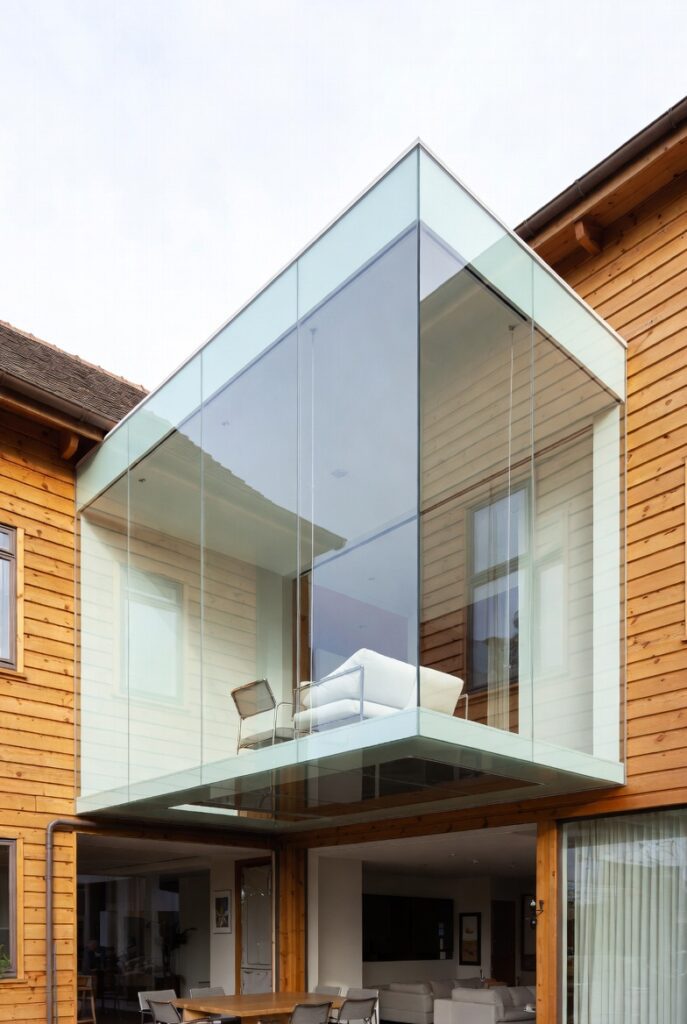
Achieving a “floating” effect is the hallmark of advanced modern engineering. A cantilevered glass extension projects out from the building with no visible corner supports, creating a defied-gravity look.
This is an excellent solution for homes built on slopes or raised ground floors. It minimizes the footprint on the ground, which can be beneficial for root protection of nearby ancient trees or simply to preserve garden space. Against a heavy, traditional base, the lightness of a cantilevered glass box creates a thrilling architectural tension.
9. The Timber and Glass Hybrid
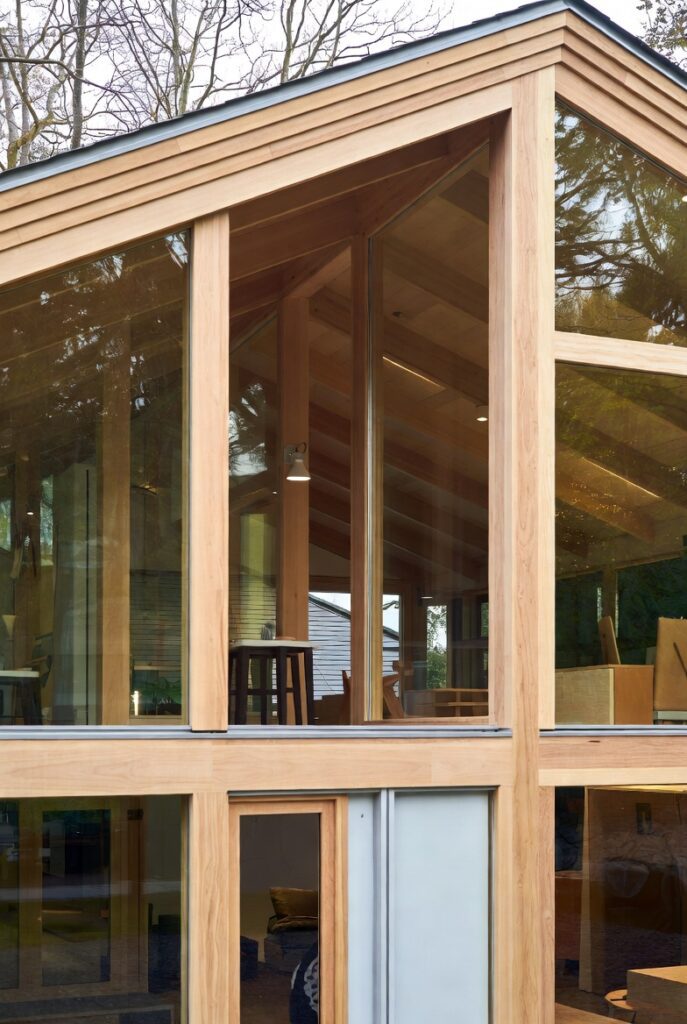
Sometimes, pure glass can feel too cold for a warm, traditional home. A timber and glass extension offers a softer alternative. Using glulam beams or oak framing combined with large expanses of glazing provides warmth and texture.
This style blends seamlessly with Tudor, Arts and Crafts, or country vernacular homes. The timber frame echoes the structural logic of older buildings, while the large glass panels provide the modern transparency required. Over time, the timber weathers to a silvery grey, further harmonizing with old stone or brickwork.
10. The Minimalist Oriel Window

A glass extension doesn’t always have to be a whole new room. An oriel window is a glass box that projects from the wall, creating a window seat or a small display niche. A frameless glass oriel window inserted into a thick stone wall creates a stunning reading nook suspended in the landscape.
This “micro-extension” brings in light and views without requiring foundations or major structural upheaval. It is a subtle, surgical intervention that modernizes a room instantly while barely altering the building’s footprint.
11. The Heritage Orangery
For those who find frameless glass too stark, the modern orangery offers a middle ground. Historically, orangeries had solid roofs with roof lanterns and substantial brick or stone pillars.
A contemporary take on this uses a solid flat roof with a large, frameless skylight and floor-to-ceiling glass panels between stone pillars. This design mimics the solidity of the main house while providing the light of a glass extension. It feels more like a permanent room than a conservatory and often simplifies planning permission in conservation areas.
12. The Basement Lightwell Extension
Many traditional townhouses have basements that feel dungeon-like. A walk-on glass extension over a basement courtyard or lightwell can revolutionize these lower levels. By extending the ground floor out with a glass floor, or covering a basement well with a glass roof, you reclaim space while transmitting light to the floor below.
This is technically complex but incredibly rewarding. It allows for vertical connectivity and turns a basement into a bright, habitable living space, adding significant value to urban heritage homes.
Frequently Asked Questions (FAQs)
Do I need planning permission for a glass extension?
In many cases, a glass extension falls under “Permitted Development” rights, provided it meets specific size and height criteria. However, if you live in a Listed Building, a Conservation Area, or an Area of Outstanding Natural Beauty, you will almost certainly need planning permission. Always consult with a local architect or planning officer before starting.
Is a glass extension too hot in summer and too cold in winter?
Historically, yes, but modern technology has solved this. You must use high-performance glass. Look for “solar control” coatings to reduce heat gain in summer and low-emissivity (Low-E) glass to retain heat in winter. Underfloor heating is also a standard solution to keep these spaces comfortable year-round.
How do I clean a glass roof?
Maintenance is a valid concern. For roof glazing, specification of “self-cleaning” glass is highly recommended. This glass has a coating that breaks down organic dirt using sunlight and allows rain to wash it away in sheets rather than droplets. However, occasional manual cleaning will still be required for stubborn debris.
Will a glass extension look out of place on my period home?
Not if designed thoughtfully. The “honest” approach—where the new addition looks distinctly modern—is often preferred by heritage bodies over a poor imitation of the past. The transparency of glass allows the original building to remain the dominant visual feature.
How much does a glass extension cost?
Glass extensions are generally a premium option. The cost varies wildly depending on complexity, access, and glass specification. Structural glazing (frameless) is more expensive than framed systems. Costs can range significantly, typically starting higher per square meter than standard brick extensions due to the bespoke engineering required.
Final Words
Choosing to add a glass extension to a traditional home is a bold design choice that pays off in light, space, and lifestyle. It requires a careful balance of respecting the past while embracing the future. The beauty lies in the contrast: the solidity of history supporting the lightness of modernity.
Whether you opt for a barely-there glass box or a structured industrial sunroom, the key is quality materials and sensitivity to the existing structure. When executed well, these extensions don’t just add square footage; they breathe new life into old bones, ensuring your traditional home is ready for decades of modern living.