
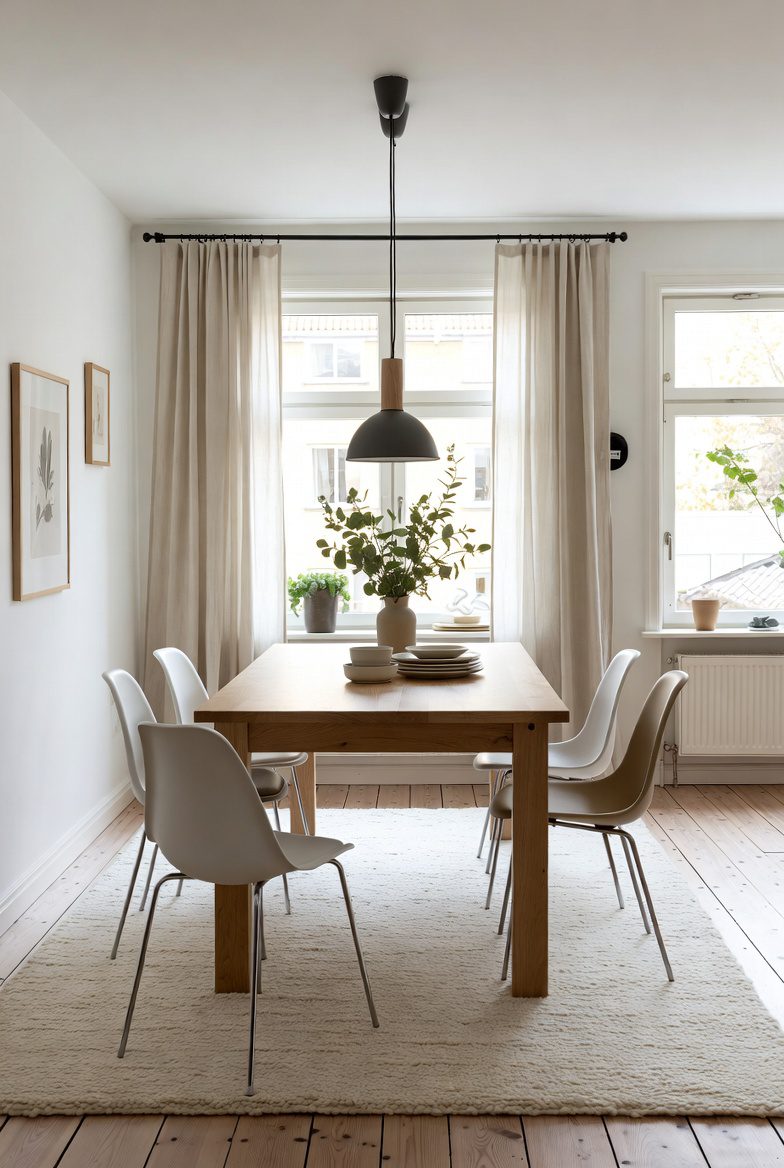
10 Scandinavian Dining Room Ideas for a Calm, Minimal Space
Creating a space that feels both inviting and uncluttered can be a design challenge. Yet, the principles of Scandinavian design achieve this balance with effortless grace. A Scandinavian dining room is more than just a place to eat; it’s a sanctuary of calm, simplicity, and functionality. Rooted in the Nordic concepts of hygge (coziness) and lagom (just the right amount), this style transforms your dining area into a bright, airy, and deeply personal space.
This guide explores ten inspiring ideas to help you create a beautiful and serene Scandinavian dining room. By focusing on natural materials, a neutral color palette, and minimalist principles, you can design a space that encourages connection and mindful living. Let’s dive into how you can bring the essence of Nordic design into your home.
Understanding the Core of Scandinavian Design
Before we explore specific ideas, it’s helpful to understand the philosophy behind the style. Scandinavian design emerged in the early 20th century across Denmark, Sweden, Norway, Finland, and Iceland. It emphasizes functionality without sacrificing beauty. Key characteristics include:
- Light and Brightness: Maximizing natural light is crucial, a response to the long, dark winters in Nordic countries.
- Natural Materials: Wood, especially light-toned varieties like pine, ash, and beech, is a cornerstone. Wool, linen, and leather are also common.
- Neutral Color Palette: White, gray, black, and beige form the foundation, often accented with muted colors inspired by nature.
- Clean Lines and Simplicity: Furniture and decor feature simple silhouettes, free from ornate details.
- Functionality: Every piece has a purpose. Clutter is minimized to create a sense of order and space.
With these principles in mind, here are ten actionable ideas for your Scandinavian dining room.
1. Embrace a Light and Neutral Color Palette
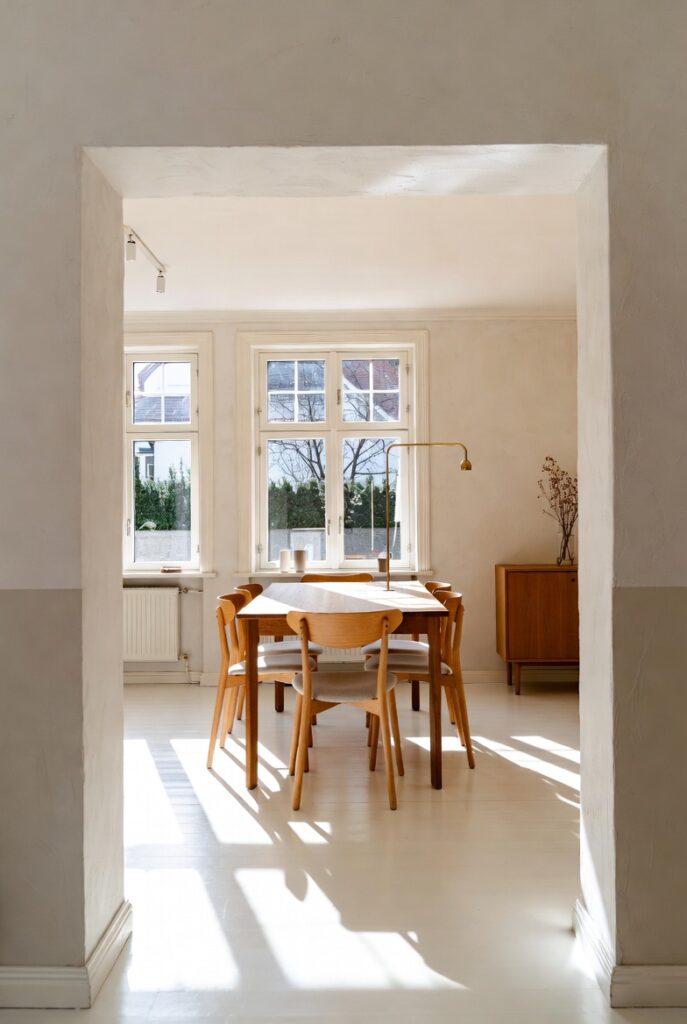
The foundation of any Scandinavian dining room is its color scheme. White walls are a classic choice as they reflect natural light, making the room feel larger and more open. This creates a clean canvas for your furniture and decor.
Don’t limit yourself to stark white. Soft grays, muted beiges, and pale blues can also create a tranquil atmosphere. Use these shades on walls, large furniture pieces, or textiles. For a touch of contrast, introduce black through picture frames, light fixtures, or chair legs. This creates a graphic element that grounds the space without overwhelming it.
2. Choose a Minimalist Wooden Dining Table
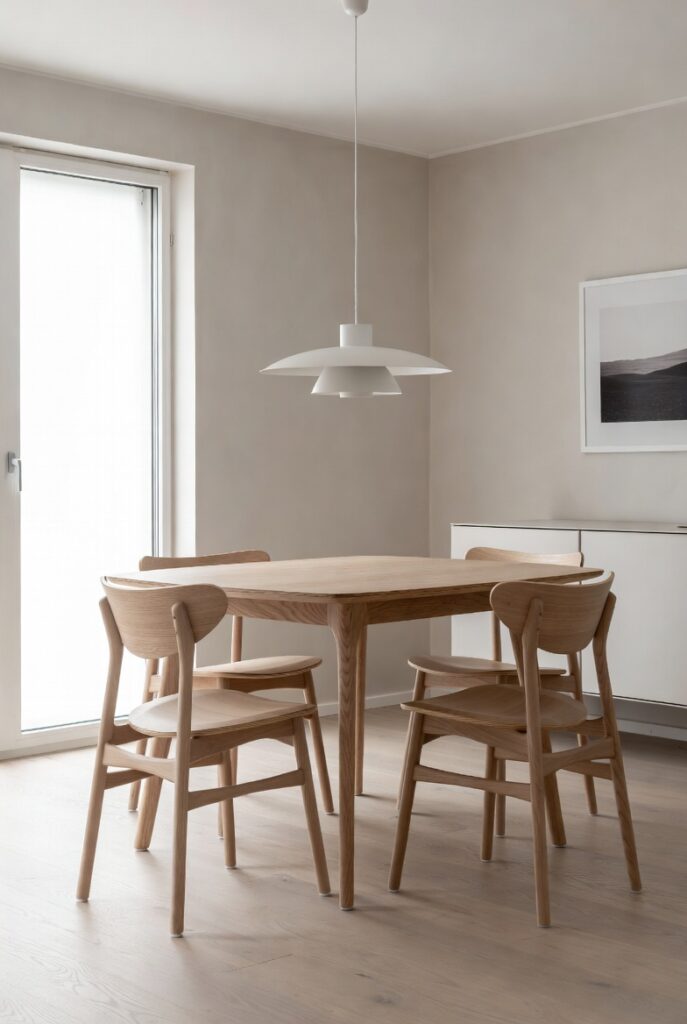
The dining table is the heart of your dining room. For a truly Scandinavian feel, select a table made from light-colored wood like oak, ash, or maple. Look for a design with clean, simple lines and tapered legs. Rectangular tables are a popular choice, offering ample space and a streamlined look.
A round table can also work beautifully, especially in smaller spaces, as it encourages conversation and creates a cozier feel. The key is to choose a piece that feels natural and unassuming. The wood’s grain should be a feature in itself, adding texture and warmth to your Scandinavian dining room.
3. Mix and Match Dining Chairs
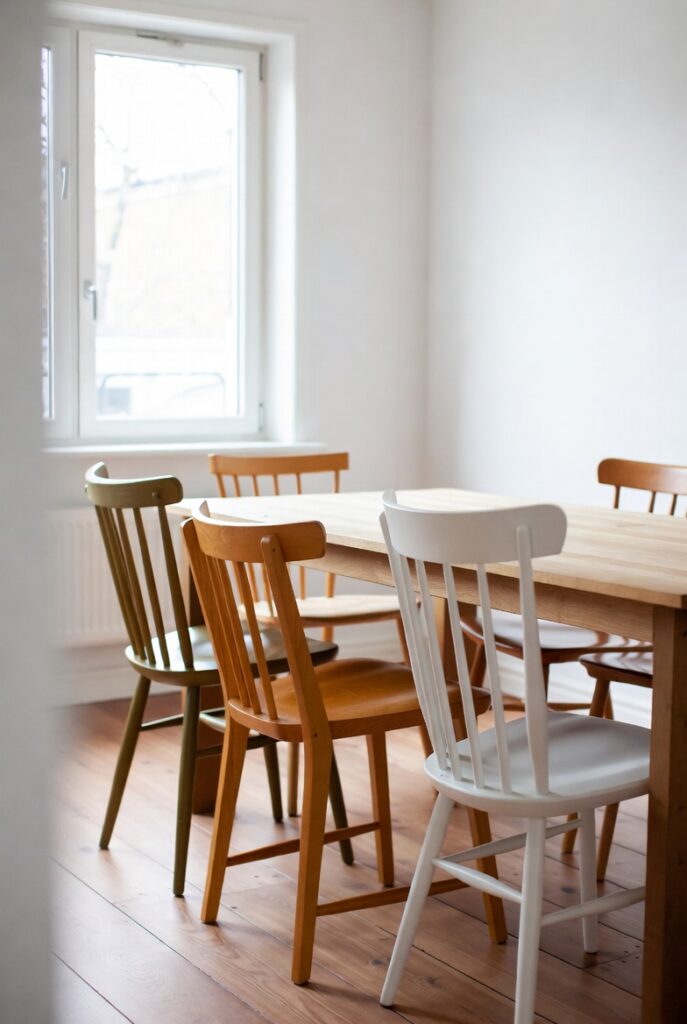
One of the most iconic elements of Scandinavian design is the use of mismatched yet complementary dining chairs. This adds personality and visual interest to the space. You can achieve this look in several ways:
- Different Styles in the Same Color: Select various chair designs—like the Wishbone, Series 7, or Ant chair—all in the same color, such as white, black, or a natural wood finish.
- Same Style in Different Colors: Choose one chair model and purchase it in a few different muted colors. Think dusty rose, sage green, and light gray.
- Incorporate a Bench: Replace the chairs on one side of the table with a simple wooden bench. This is a practical solution for families and adds a rustic, communal feel.
This approach keeps the room from feeling too uniform and allows for individual expression within the minimalist framework.
4. Prioritize Natural Light and Simple Window Treatments
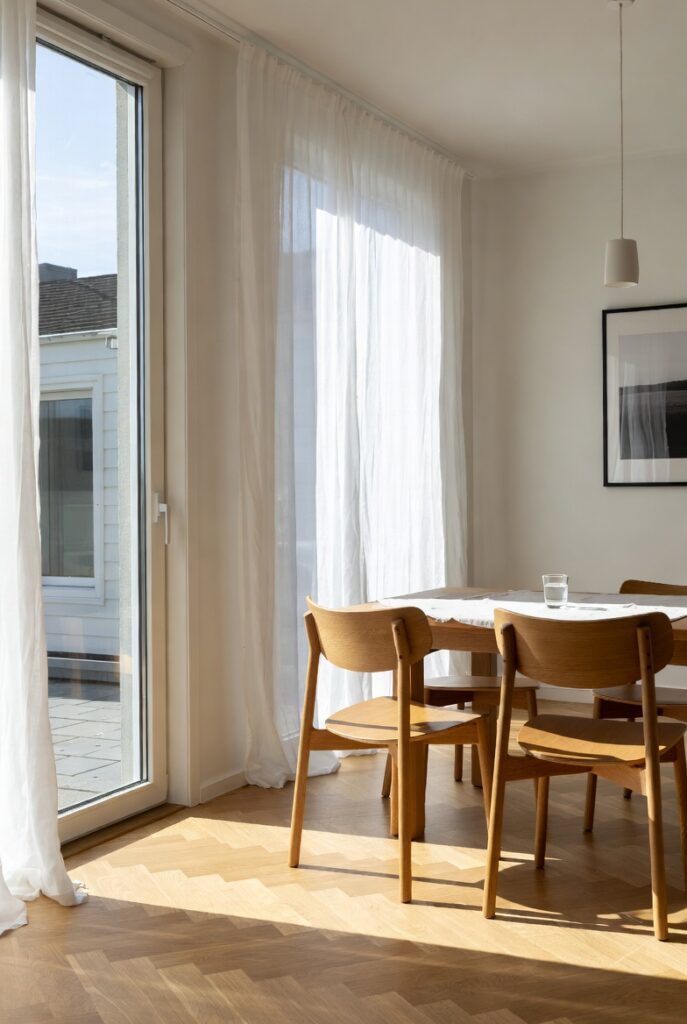
Scandinavians cherish natural light. Keep your windows as unobstructed as possible. If privacy is a concern, opt for simple, sheer curtains made from linen or light cotton. These will diffuse the light beautifully while maintaining a sense of openness.
Avoid heavy drapes, ornate valances, or thick blinds. The goal is to let as much daylight flood into your Scandinavian dining room as possible. This connection to the outdoors is fundamental to the style and contributes significantly to the room’s calm and airy ambiance.
5. Install a Statement Pendant Light
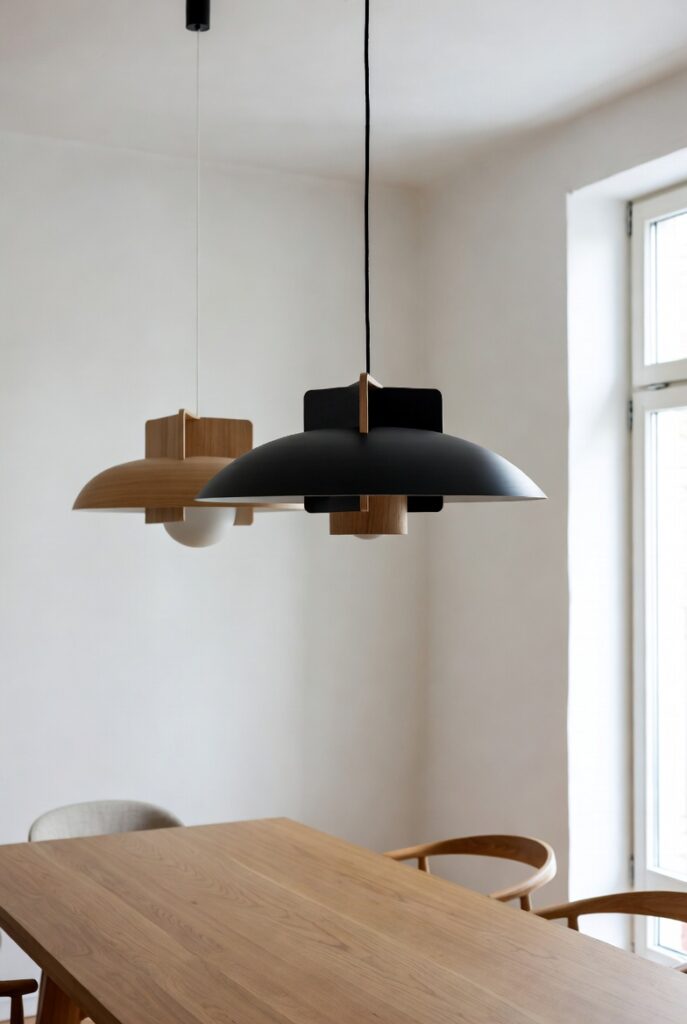
Lighting is both functional and decorative in a Scandinavian dining room. A single, well-chosen pendant light hung low over the dining table serves as a focal point. Look for fixtures with simple geometric shapes, natural materials, or an industrial touch.
Popular choices include multi-bulb pendants, sculptural paper lanterns, or metal dome-shaped lights in black or white. The fixture should provide focused light for dining while adding a touch of modern artistry to the room. Dimmers are a great addition, allowing you to adjust the mood from bright and functional to soft and intimate.
6. Keep Decor Simple and Intentional
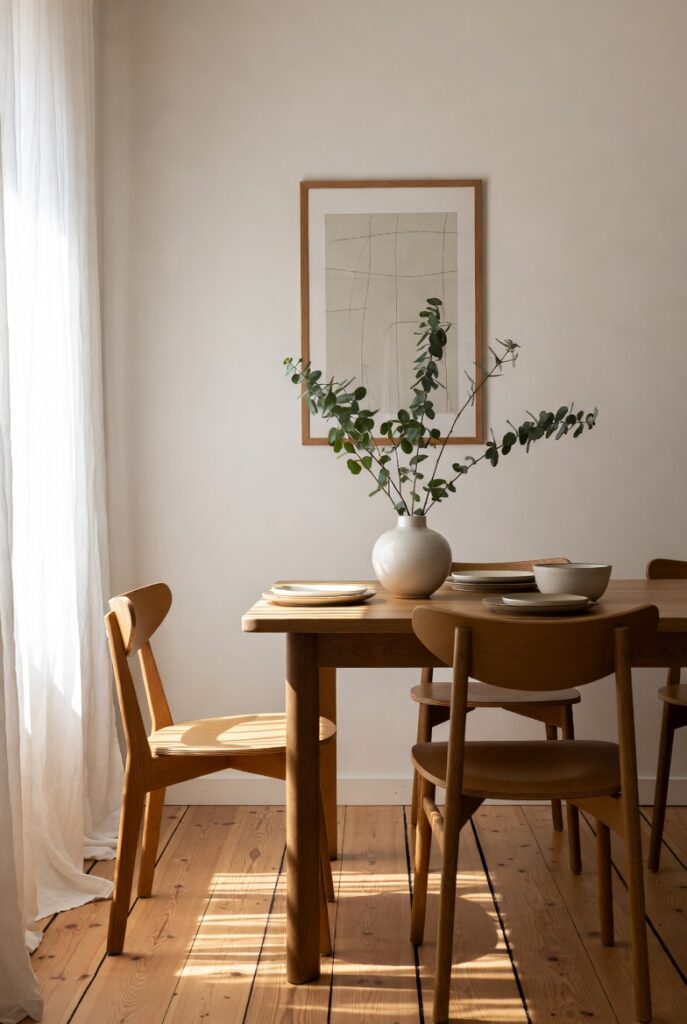
Minimalism is key when accessorizing your space. In a Scandinavian dining room, less is truly more. Every decorative object should have a purpose or hold personal meaning.
- Art: Choose one or two large pieces of abstract or nature-inspired art with a simple frame. A gallery wall of black-and-white photographs can also work well if kept clean and organized.
- Ceramics: Display a small collection of handmade ceramic vases or bowls on a sideboard or the dining table. Their organic shapes add a soft, human touch.
- Greenery: A tall, leafy plant in a simple pot or a few fresh branches in a vase brings life and a pop of color into the room. Plants like the Fiddle Leaf Fig or Snake Plant are excellent choices.
Avoid clutter at all costs. The goal is to create visual breathing room.
7. Incorporate Cozy Textiles
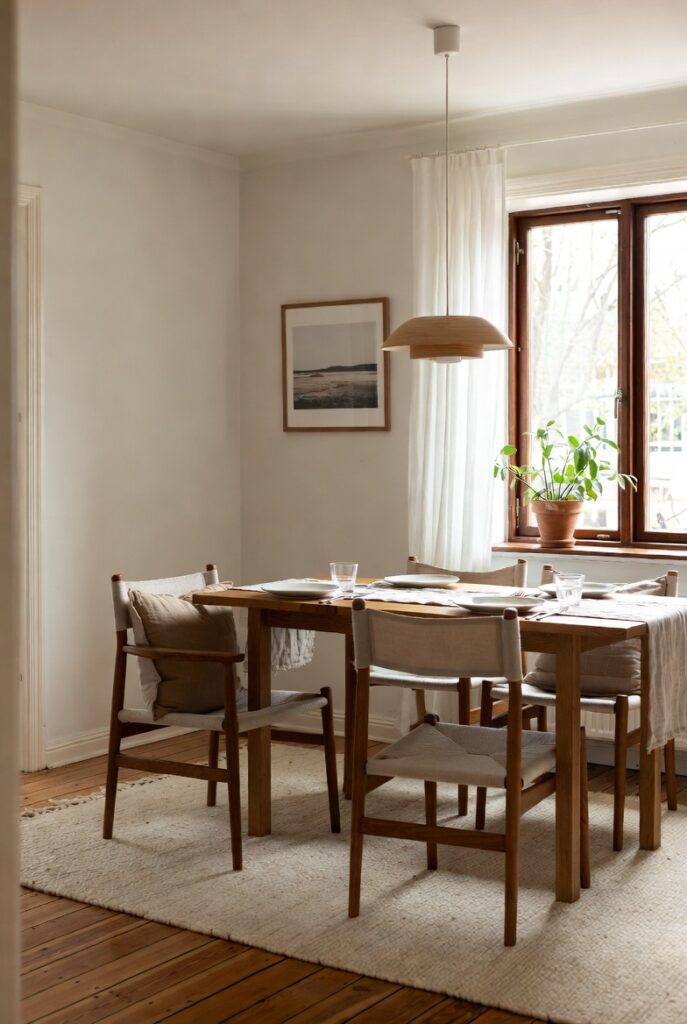
To balance the clean lines and neutral colors, introduce soft, cozy textiles. This is where the Danish concept of hygge comes into play. Drape a sheepskin throw over a chair or bench to add texture and warmth. Use simple linen tablecloths or placemats for special occasions, but for everyday use, let the natural beauty of your wooden table shine.
A large, neutral-toned rug under the dining table can also help define the space and add a layer of comfort. Choose a rug with a subtle geometric pattern or a simple, solid color to complement your Scandinavian dining room design.
8. Add Functional Storage
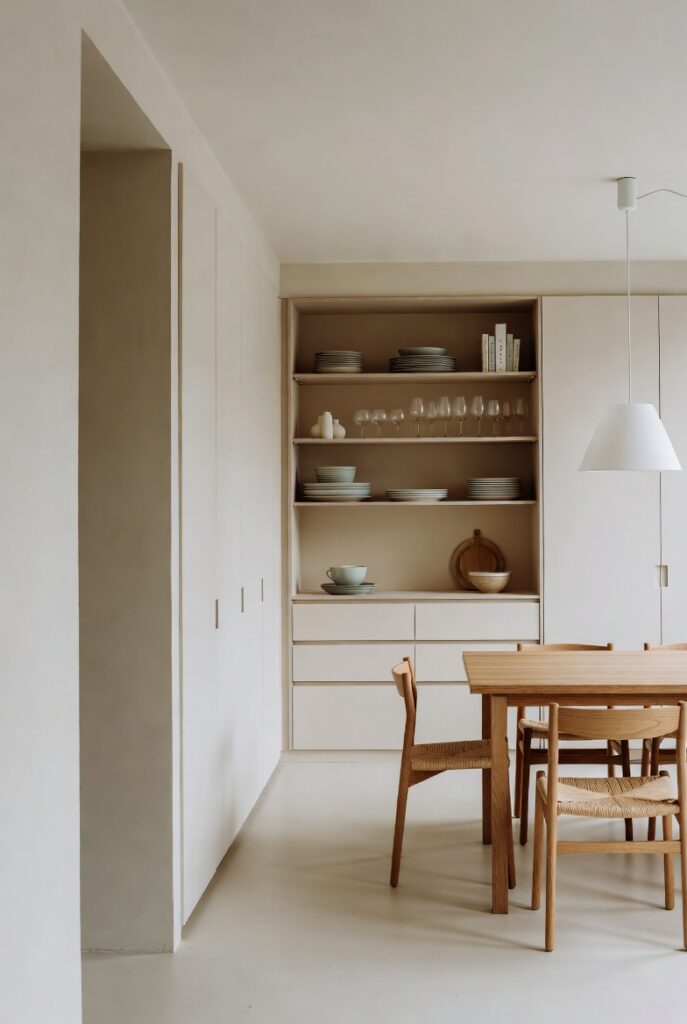
A well-designed Scandinavian dining room is a clutter-free zone. Functional storage is essential for maintaining this sense of order. A simple, low-profile sideboard or credenza is a perfect addition. Look for a piece made from the same light wood as your dining table, with clean lines and no ornate hardware.
Use this unit to store dinnerware, linens, and other dining essentials, keeping them out of sight but easily accessible. The top surface can be used for a few carefully curated decorative items, such as a lamp, a plant, or a couple of candles.
9. Let Natural Materials Shine
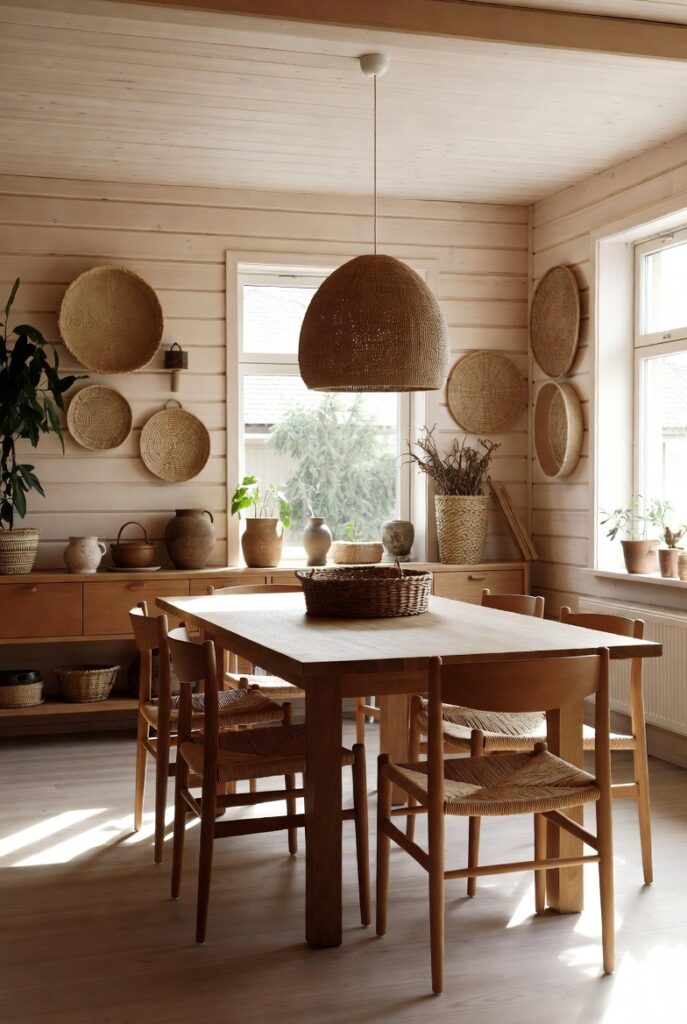
The beauty of a Scandinavian dining room lies in its celebration of natural materials. Let the texture and grain of your wooden furniture be the star. Complement it with other natural elements like wool, leather, stone, and linen.
A stone candlestick holder, a leather-seated chair, or a wool rug all contribute to a rich, tactile experience. These materials connect the space to the natural world, fostering a sense of peace and authenticity. The focus is on quality and craftsmanship, choosing pieces that will stand the test of time.
10. Create a Personal Touch
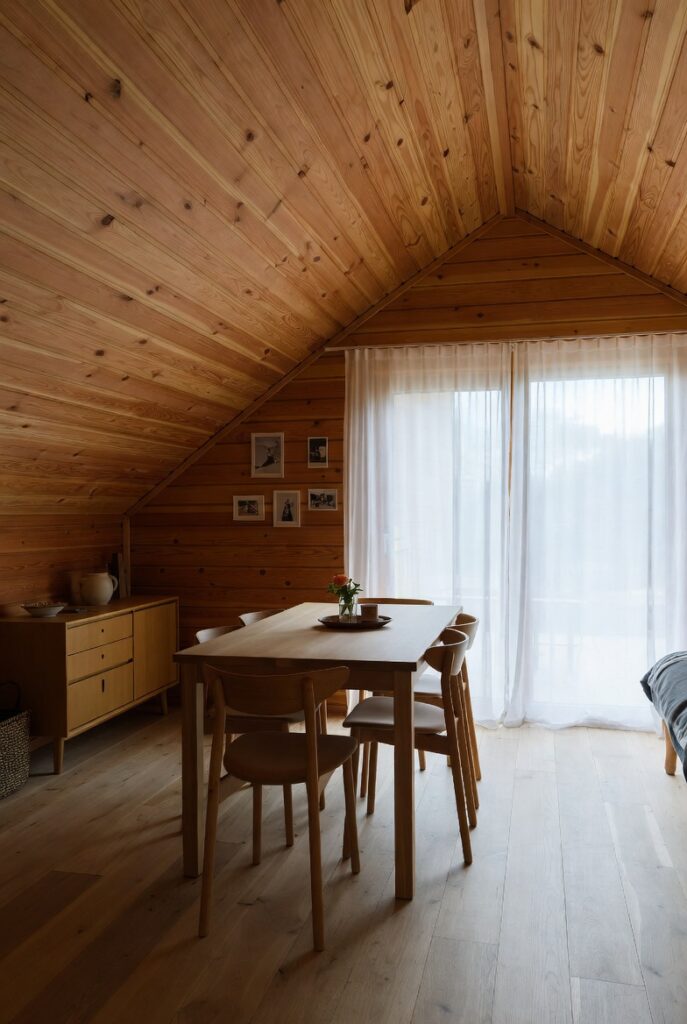
Finally, make the space your own. While Scandinavian design follows certain principles, it is not a rigid formula. Your dining room should reflect your personality and lifestyle. Display art that you love, use ceramics made by a local artisan, or place a treasured object on your sideboard.
This personal layer is what transforms a beautifully designed room into a warm and welcoming home. It ensures your Scandinavian dining room is not just a showroom for a particular style, but a meaningful space where you and your loved ones can gather and create memories.
Frequently Asked Questions (FAQs)
Q: Can a Scandinavian dining room have color?
A: Absolutely. While the base is neutral, Scandinavian design often incorporates color in a measured way. Think muted, nature-inspired hues like sage green, dusty blue, soft pink, or terracotta. Use these colors as accents in textiles, artwork, or a selection of dining chairs to add personality without disrupting the calm aesthetic.
Q: What kind of flooring is best for a Scandinavian dining room?
A: Light wood flooring is the most authentic choice. It enhances the bright, airy feel of the room. If you have darker floors, you can lighten the space by adding a large, light-colored area rug made of natural fibers like wool or jute.
Q: How can I make my Scandinavian dining room feel cozy and not cold?
A: The key is to layer textures. Incorporate soft elements like sheepskin throws, linen napkins, a wool rug, and live plants. Warm, dimmable lighting from a statement pendant and candles will also create an inviting, hygge-filled atmosphere. The warmth of natural wood furniture also plays a major role in preventing the space from feeling sterile.
Q: Is this style suitable for small apartments?
A: Yes, Scandinavian design is perfect for small spaces. Its emphasis on light colors, minimalism, and functional furniture helps make small rooms feel larger and less cluttered. A round table, a bench for seating, and smart storage solutions are all great strategies for a compact Scandinavian dining room.
Final Words
Creating a Scandinavian dining room is an exercise in thoughtful simplicity. It’s about choosing quality over quantity, function over frills, and calm over chaos. By focusing on a foundation of natural light, neutral colors, and beautiful wooden furniture, you can build a space that is both stylish and deeply restorative.
Remember to balance minimalism with warmth by layering in cozy textiles and personal touches. The result will be more than just a place to share meals—it will be the heart of your home, a serene retreat that embodies the best of Nordic living.